In an emergency situation, people have little time to consider what to do next. Confusedness is a common occurrence in circumstances that are stressful. This is especially true within large buildings like offices, warehouses and apartments. The clarity of emergency plans can reduce confusion.
The well-designed evacuation and intervention strategies offer immediate, visual guidance that helps occupants, staff security personnel, and firefighters respond more effectively when every second counts. These plans do not consist of a wall-mounted document. They are useful safety tools designed to aid in emergency situations.
Businesses and public establishments across France are increasingly aware of the need to ensure that emergency documents are up-to-date and easily readable, clearly placed and tailored to the specific building.
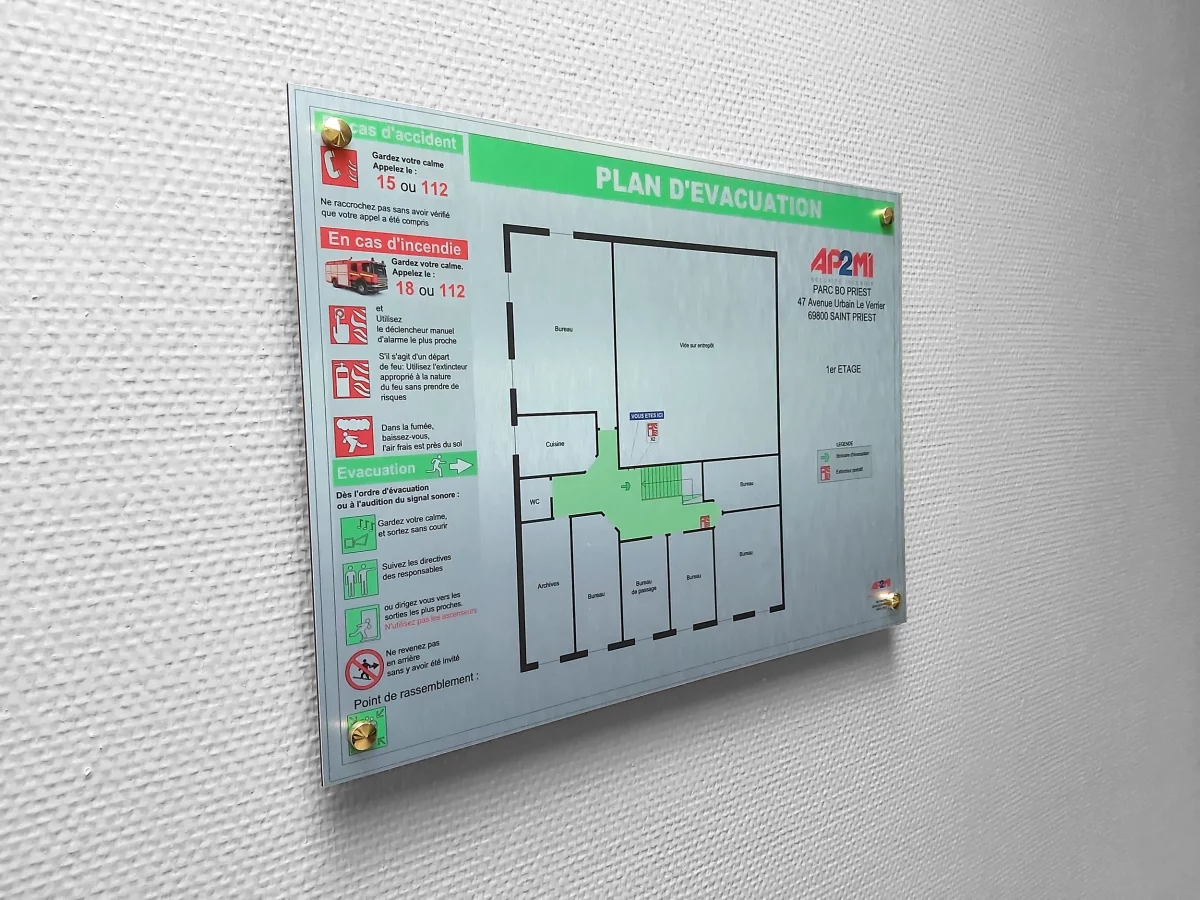
The goal of evacuation and intervention plans is different.
Most people believe that all fire safety programs perform the same role, however evacuation plans and intervention plans are designed for different types of audiences.
The primary intended audience for an evacuation strategy for Lyon properties is residents, customers, employees contractors, residents, and other visitors. Its goal is to ensure that all people are able to safely leave the building in an emergency.
They usually include exits, staircases as well as evacuation routes, alarm systems, emergency equipment and points of assembly. The place of this information is also vital, as the people who live there must be able to find it immediately in stressful situations.
An Intervention plan for Clermont-Ferrand buildings however it is specifically designed for firefighters, emergency responders and security teams. It includes information about emergency access, utility shut downs, circulation areas, technical rooms and safety systems. Both kinds of plans are used to support safer emergency responses. For more details, click here plan évacuation Lyon
The importance of visibility and placement is greater Than Many Realize
The plan for fire safety is only effective when people are able to see the plan and comprehend it. Plans that are hidden behind doors, positioned too high, hard to read, outdated or poorly lit will are often ineffective and lose a lot of their use in emergency situations. Both content and placement are critical in the planning process to ensure fire safety.
Evacuation plans are typically placed close to entrances, lobbies hallways, stairs, and major circulation areas where people are likely to pass through throughout the day. The plans for intervention are typically placed near fire department access points such as technical areas, or security station so that emergency personnel are able to get access to crucial information regarding the building on arrival. Professionally designed plans improve accessibility, readability, as well as overall coordination of emergency situations throughout the building.
New Fire Safety Regulations for the Future are changing expectations
In France French, fire safety rules remain in flux for buildings with public access. Prior to this, buildings were exempt from certain planning obligations, many Category 5 ERP structures are now required to display evacuation and intervention documents regardless of layout. Professional assistance is becoming increasingly sought by property management companies, business owners trustees, public facility operators to ensure conformity.
Clermont’s properties should have an evacuation and intervention strategy in place if they wish to be safe and compliant. Additionally, they should be ready for possible modifications. Documentation that is updated shows professionalism for emergency services, inspectors and occupants too.
The accuracy of information on buildings is crucial for emergency responders.
In the case of a fire, or an emergencies, firefighters often enter unfamiliar buildings under extremely challenging conditions that include heat, smoke, limited visibility, and time pressure. A precise intervention plan helps emergency responders understand the structure faster.
A successful Fire Intervention plan for Lyon properties can include emergency access points, utilities shutoff zones, compartmentalization spaces, technical rooms and smoke extractor systems as well as fire safety equipment within the building.
The availability of this information helps emergency personnel make faster operational decisions, as well as improving the overall efficiency of interventions. For larger buildings or property with more complex structures, current and well-organized intervention documentation can help improve emergency coordination.
Regular Updates Keep Plans Relevant
Buildings change over time. Changes in the office, such as remodelling, wall modification as well as relocations of technical equipment, and adjustments to circulation routes, could be observed. Fire safety plans that have not been updated following these changes can quickly be inaccurate. In an emergency situation, an outdated evacuation plan, or a lack of technical detail can cause confusion.
Regular reviews can ensure that emergency plans are in line with the actual building layout and safety procedures. The majority of organizations consider periodic updates more as a part of their risk management process instead of merely an administrative function. Professionals can help companies manage these updates while maintaining the current guidelines and best practices.
Plan for the Safety of Fire – A Clear Methodology for Creating Safer Environments
Prevention of fire doesn’t have to be limited to extinguishers and alarms alone. If security is managed effectively individuals learn to be calm and efficient when an emergency arises.
Employees feel more confident that emergency procedures are readily visible and organized. Clear evacuation routes benefit people who visit. Emergency responders are quicker to gain access to crucial information about buildings. Fire safety planning is a service that is professional and beneficial for everyone. France protect securite incendie helps businesses across the region of Auvergne-Rhone-Alpes to create safer commercial, industrial, and public environments through carefully designed evacuation and intervention planning.
The importance of preparation during emergency situations
Emergency situations rarely give warning. It is the preparation that determines the efficiency of a building’s response to a crisis.
Security is improved with a a well-prepared Fire intervention plan in Lyon and an organized evacuation Plan for Lyon buildings and services, as well as a specific plan for the preparation of an intervention and evacuation plan for Clermont.
Plans that are well-placed in a clear and current manner can ease confusion, boost coordination and promote safer evacuations.
For businesses and public establishments having a clear plan for emergencies isn’t just about ensuring compliance with guidelines. It’s about improving safety, protecting people and creating safer spaces every day.